
By: Alexis Overby
Large discrepancies in relation to tooth size, number, and formation have been the subject of scientific inquiry, as researchers seek to find a correlation between genetics and evolution, and third molar agenesis or absence (Pereira, T. V, et al., 2006). Wisdom teeth, or third molars, typically erupt from ages 17-25. Their existence dates back to early human ancestors who had larger jaws and thicker enamel in their extra molar teeth, allowing them to chew the tougher food common in their diets. Early hominins required robust chewing muscles, but with the evolution of the human species and the introduction of practices like agriculture and food storage, selective pressures shifted. This led to a gradual reduction in jaw size, with facial profiles additionally growing flatter. Consequently, third molars have become vestigial, and in some cases, suspect for harm (Letra, A et al., 2023).
Research regarding the connection between molar agenesis and genetics, has associated tooth development with specific genes. One particular gene, PAX9, controls formation of mammalian teeth, and has been linked to the absence of molars in both mice and humans. Through the sequencing of kilobases of the gene, focusing on all four coding regions and utilizing DNA from 86 different participants belonging to European, Asian, and Native American background, scientists found that changes in the gene only existed in exon 3, a protein-coding sequence (see below) (Pereira, T. V. et al., 2006) (Aspden, J. L et al., 2023).
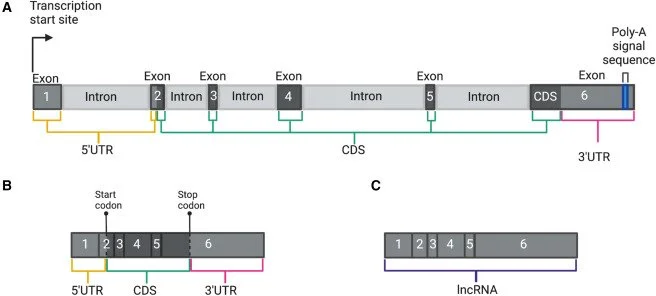
Figure 1: Genome-wide association analysis of third molar agenesis. From Letra, A., Menezes, R., Govind, S., & Vieira, A. R. (2023). Insights into the genetic basis of third molar development through association analysis of 9.4 million genetic markers, Cell Genomics, 3(5), 100296. https://doi.org/10.1016/j.xgen.2023.100296. © 2023 Elsevier.
Through further research, it was found to be strongly suggested that PAX9 was under strong purifying selection, failing to tolerate vast changes because of how crucial it is for normal development (Pereira, T. V. et al., 2006). As mentioned previously, third molar formation does not always occur, and there seems to be a direct correlation to third molar formation and genetics, as research supports that higher probabilities of third molar generation may be more common in some ethnic populations as compared to others, with this particular study focusing on whether or not these discrepancies come as a result from PAX9 (Carter, K et al., 2015) (Pereira, T. V. et al., 2006).
Researchers have recently discovered a correlation between third molar generation and specific genes: AXIN2, MSX1, PAX9, and PAX9. The later two have been the most studied, while the former two are linked to mutations that can stop certain teeth from forming. For example, the connection is seen in a study involving Wnt signaling, the process of shaping the body during development to ensure correct organ formation. Researchers found that, with subjects who had oligodontia, they were more likely to develop colon cancer as a result of the mutation in the gene inhibiting body part formation. This mutation in the AXIN2 gene causes Wnt signaling to become hyperactive, most likely causing both the missing teeth and the cancer risk, demonstrating the suggested connection between tooth agenesis and genetics (Lammi, L. et al., 2004).
In order to determine a correlation between whether or not some humans were naturally missing molars or not, researchers compared 2 groups, those naturally missing teeth not due to injury or disease, and a control group without missing teeth, each consisting of over 300 participants. Through this experiment, the researchers concluded that people already missing other teeth were significantly more likely to also be missing third molars, with a 50.8% prevalence in the experimental group and a 20.5 prevalence in the control group. Among these individuals with an agenesis of third molars, the most common pattern was a lack of all four wisdom teeth (Scheiwiller, M., 2020).
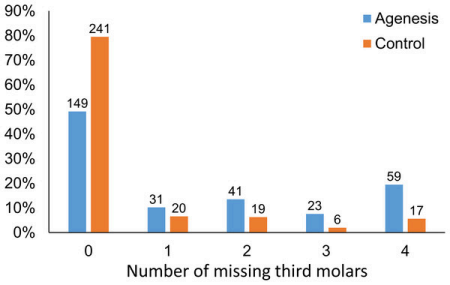
Figure 2: Prevalence of third molar agenesis in individuals with and without agenesis of other teeth. From Scheiwiller, M., Oeschger, E. S., & Gkantidis, N. (2020). Third molar agenesis in modern humans with and without agenesis of other teeth, PeerJ, 8, e10367. https://doi.org/10.7717/peerj.10367. Licensed under CC BY 4.0.
To further support the hypothesis of the connection of genetics to wisdom teeth, researchers have studied how third molar nondevelopment differed among ethnic groups and populations of different continents, particularly Europe, North America, Africa and Asia (Japan), with agenesis in different populations ranging from almost zero (Tasmania) to nearly 100% (Native Mexicans). Based on the analysis of this evidence, researchers believe that these discrepancies are most likely due to genetic drift, the shift of gene frequencies within a population passed down over time, as opposed to natural selection (Rotimi, C., 2022) (Rozkovcová, E. et al.). In another study, researchers conducted a meta-analysis of 92 high-quality studies with over 63,000 participants to conclude how common it is to possess wisdom teeth, finding that, on average, 23% of the population were missing at least one. However, as supported in the study, this information varied significantly from region to region. A subgroup concluded women were 14% more likely than men to have an agenesis of more than one tooth, and that the maxillary agenesis was 36% more probable than the mandibular agenesis in both sexes (Carter, K. et al., 2015). Each of these individual studies contribute to the grander field of dental and genetic inquisition, reinforcing the hypothesis that genetics is a contributing factor of wisdom tooth agenesis, though researchers still remain uncertain about the specific conclusions.
As the research suggests, there is a correlation between genetics and wisdom tooth formation, being linked to key genes such as PAX9 or AXIN2. However, the extent of this correlation is still unclear, as wide disparities between populations dependent on ethnicity and continent indicate genetic drift as causation for these variations in agenesis. Further investigation, based on the results of these past studies, has been prompted, as researchers aim to deepen their knowledge of dental development and the role one’s genetics play. Ultimately, additional research into this topic poses answers to questions held by scientists and regular individuals alike, aiming to heighten our understanding of human evolution, oral health, and population diversity.
References
Carter, K., & Worthington, S. (2015). Morphologic and demographic predictors of third molar agenesis. Journal of Dental Research, 94(7), 886–894.
https://doi.org/10.1177/0022034515581644
Lammi, L., Arte, S., Somer, M., Järvinen, H., Lahermo, P., Thesleff, I., Pirinen, S., & Nieminen, P. (2004). Mutations in AXIN2 cause familial tooth agenesis and predispose to colorectal cancer. The American Journal of Human Genetics, 74(5), 1043–1050.
https://doi.org/10.1086/386293
Letra, A., Menezes, R., Govind, S., & Vieira, A. R. (2023). Insights into the genetic basis of third molar development through association analysis of 9.4 million genetic markers. Cell Genomics, 3(5), 100296. https://doi.org/10.1016/j.xgen.2023.100296
Letra, A., & Weinberg, S. (2023, December 13). Why do people have wisdom teeth? University of Pittsburgh.
https://www.pittwire.pitt.edu/pittwire/features-articles/curious-kids-wisdom-teeth Pereira, T. V., Salzano, F. M., Mostowska, A., Trzeciak, W. H., Ruiz-Linares, A., Chies, J. A. B., Saavedra, C., Nagamachi, C., Hurtado, A. M., Hill, K., Castro-de-Guerra, D., Silva-Junior, W. A., & Bortolini, M.-C. (2006). Natural selection and molecular evolution in primate PAX9 gene, a major determinant of tooth development. Proceedings of the National Academy of Sciences, 103(15), 5676–5681.
https://doi.org/10.1073/pnas.0509562103
Aspden, J. L., Wallace, E., & Whiffin, N. (2023). Not all exons are protein coding: Addressing a common misconception. Cell Genomics, 3(4), 100296.
https://doi.org/10.1016/j.xgen.2023.100296
Rotimi, C. (2022, September 6). Genetic drift. Genome.gov.
https://www.genome.gov/genetics-glossary/Genetic-Drift
Rozkovcová, E., Marková, M., & Dolejsí, J. (1999). Studies on agenesis of third molars amongst populations of different origin. Sbornik Lekarsky, 100(2), 71–84.
https://pubmed.ncbi.nlm.nih.gov/11220165/
Scheiwiller, M., Oeschger, E. S., & Gkantidis, N. (2020). Third molar agenesis in modern humans with and without agenesis of other teeth. PeerJ, 8, e10367.
https://doi.org/10.7717/peerj.10367